SaaS landing page
A conversion-focused home page with hero, bento features, integrations, pricing and FAQ already wired together.
Pivot is a SaaS and startup landing page template built with Astro 7 and Tailwind CSS 4. It reuses the palette, Spartan font and spacing of the original Tailwind HTML template it was ported from, with a dark and a light theme. There is no React or other UI framework: every component is native Astro.
Use it as a SaaS landing page, a startup site or the public face of your next web application. Every colour, size and gap comes from one set of design tokens.
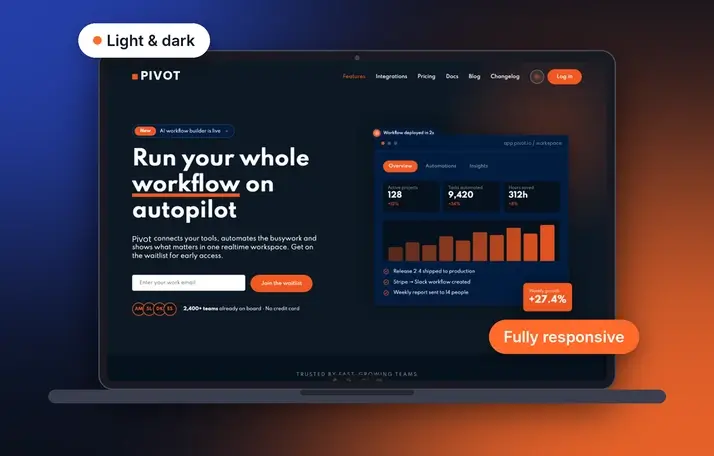
Pivot is an Astro SaaS template and Astro landing page template built with Astro 7 and Tailwind CSS 4. It reuses the palette, Spartan font and spacing of the original Tailwind HTML template it was ported from, with a dark and a light theme. There is no React or other UI framework: every component is native Astro, and the few pieces that need interactivity are small vanilla TypeScript modules.
The home page ships 12 sections — hero, logos, bento features, how it works, integrations, stats, pricing, testimonials, changelog, blog, FAQ and a call to action — and the blog section alone doubles as an Astro blog template: it and the changelog and docs are MDX content collections with a typed schema, so new posts and pages are a matter of adding a file.
Every card on this page is a real piece of the template. Open any page below, then read the documentation to make it yours.
Start from the structure that fits, then replace the copy and tokens.
A conversion-focused home page with hero, bento features, integrations, pricing and FAQ already wired together.
An Astro Tailwind startup template: story, stats, logos, testimonials and a changelog that tracks every release.
Design tokens in one file make re-branding an Astro agency or consulting template for a client a matter of minutes.
A calm, dark-by-default corporate theme with the same pricing, integrations and stats sections business sites need.
An AI landing page template built on Astro: integrations grid, how-it-works tabs and a waitlist form ready for a launch.
Reuse the blog, changelog and docs content collections for a product's own documentation and release notes.
Click any card to open the page in a new tab. They are real pages, not screenshots.


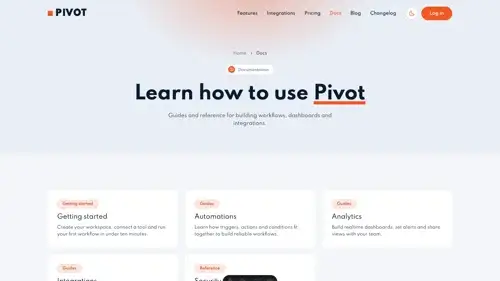
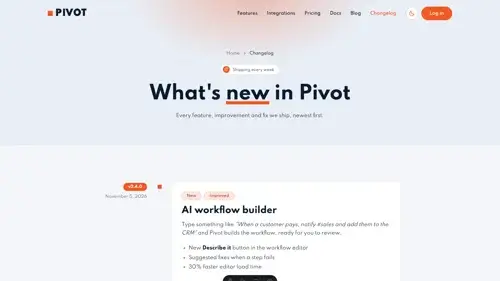


Seven real pages, shown above: home, blog listing and post, docs index and article, changelog and 404.
Everything below exists in the source and is described in the documentation.
Hero, logos, bento features, how it works, integrations, stats, pricing, testimonials, changelog, blog, FAQ and call to action.
Astro content collections with a typed schema: 6 blog posts, 4 changelog entries and 5 docs pages with sidebar and prev/next links.
One set of CSS variables. The saved theme is applied before first paint, so there is no flash on reload.
Colors, Spartan font, type scale and 120px section rhythm are tokens in one place. Change the brand color in a single variable.
Bento grid, animated beam, marquee and number ticker are plain Astro components. Only the few that truly need interactivity load a small vanilla script.
Waitlist and demo request forms validate on input with Zod, the same schema the PHP endpoint re-checks. Honeypot field included, no component framework required.
Login, signup and forgot-password UI in a native <dialog>, with client-side validation. Bring your own backend or provider.
Per-page title, description, canonical, Open Graph, Twitter card, a JSON-LD @graph, generated sitemap and robots.txt. Titles stay under 60 characters.
TypeScript checked with astro check on every build, code formatted with Prettier, files kept under 140 lines.
Everything here works out of the box and is documented.
Live Zod validation in the browser, re-checked and emailed by a PHP endpoint with a honeypot field.
A native <dialog> opened from any data-auth-open element, switching between three views.
Reads and writes localStorage('theme') before first paint, so there is no flash on reload.
Switches panels in the hero preview, lead capture and auth modal, driven by tabs.ts.
Plain Astro components for the features and integrations sections, powered by Motion for the beam animation.
A CSS marquee for logos and testimonials, and a Motion-powered count-up ticker for stats.
drawer.ts and nav-spy.ts run the mobile menu and highlight the active section link on scroll.
Blog, changelog and docs, each with a typed Zod schema validated by src/content.config.ts.
Pick a topic to see how little you need to change.
Every colour is a CSS variable in tokens.css. Edit --dark-primary and buttons, links and the theme toggle all follow.
/* src/styles/tokens.css */
:root {
  --dark-primary: #f15822;
  --dark-page-bg: #06111d;
}Spartan is self-hosted via Fontsource. Body text is 0.875rem / 1.6, and every size is defined in rem, never px.
@theme inline {
  --font-sans: 'Spartan', sans-serif;
}Sections use 120px of vertical padding (80px below 768px). Cards use 30px padding and a 10px radius; buttons are 50px pills.
.section { padding-block: 120px; }
.card { padding: 30px; border-radius: 10px; }Dark is the default theme. An inline script reads the saved choice before first paint, so there is no flash.
<html data-theme="dark">
:root[data-theme='light'] { /* overrides */ }Home, blog, changelog and docs, each pre-rendered to static HTML.
Colors, fonts, spacing and radius live in one file, tokens.css.
No React, Vue or other UI framework ships to the browser.
Mobile-first from phones to wide desktops, with a drawer menu.
Small, well-maintained tools, each with one clear job.
No. Every page is pre-rendered to static HTML by astro build. The waitlist and demo request forms post to two small PHP scripts in public/api, which only need PHP's mail() function on the host; everything else is static files you can host anywhere.
No. Every component is native Astro. The handful of interactive pieces (the auth modal, tabs, the billing toggle, live form validation) are small vanilla TypeScript modules in src/scripts, so no component framework ships to the browser.
The login, signup and forgot-password modal UI and client-side validation are included. No backend or provider is wired up: connect Auth.js, Clerk, Supabase or your own API in src/features/auth.
Yes. Every page has its own title, description, canonical URL, Open Graph tags and JSON-LD structured data, plus a generated sitemap and robots.txt.
Yes. Re-brand it through the design tokens in tokens.css, replace the placeholder copy and images, and deploy the dist/ folder.
Yes. The project root includes AGENTS.md and CLAUDE.md with the stack, commands, folder structure and conventions, so tools such as Claude Code, Cursor and Copilot work with the template out of the box.
Get the template, follow the documentation and have your first page running in minutes — among Astro templates, Pivot is built to be the one you don't have to fight to customize.