
ECOM – React Next.js E-Commerce Website Template
ECOM is a simple, fully-featured React Next.js e-commerce website template built with product listings, cart, and checkout flow, perfect for launching an online store quickly today.

See every module before you buy
Each screenshot opens the full ECOM – React Next.js E-Commerce Website Template live preview, where you can browse the live preview and documentation.


Overview
About ECOM
Starting an e-commerce business shouldn't require months of custom development before the first product ever gets listed for sale to an actual paying customer. ECOM – E-Commerce React Next.js Template was built to close that gap, offering a simple, fully-featured, and attractive React and Next.js e-commerce website template that makes it a genuinely strong choice for anyone who wants to start their own online store without building the entire storefront infrastructure from scratch.
ECOM covers the core commerce experience a real online store needs: product listings, product detail pages, a shopping cart, and a checkout flow, all delivered as genuine React and Next.js components rather than static HTML retrofitted into a framework shell. That distinction matters for e-commerce specifically, where interactive elements — cart updates, quantity selectors, filtering — benefit directly from React's component-driven approach to state management and real-time interface updates.
The template is well suited for entrepreneurs launching a first online store, small businesses moving their product catalog online, React developers building e-commerce experience into their portfolio, and agencies building React-based storefronts for clients. ECOM's clean, attractive design keeps the shopping experience simple and approachable without unnecessary complexity standing between a visitor and a completed purchase.
Category Navigation
Structured category navigation components help customers browse a catalog logically, especially useful for stores selling across multiple distinct product categories or lines.
Why React and Next.js Suit E-Commerce Especially Well
E-commerce interfaces are inherently interactive — adding items to a cart, updating quantities, filtering products, applying discount codes — and React's component model handles this kind of dynamic state management more naturally than templates built around traditional page reloads. A visitor adding a product to their cart expects immediate visual feedback, and React's approach to state updates delivers that responsiveness without the jarring full-page refresh that plain HTML e-commerce templates often require, which can otherwise interrupt the shopping momentum right when a customer is most engaged.
Next.js adds a further advantage specific to e-commerce: server-side rendering supports fast initial load times and strong SEO performance for product pages, both of which matter directly for a store's ability to be discovered through organic search and to convert visitors who arrive with genuine purchase intent already in mind. A slow-loading product page costs sales directly, since online shoppers abandon slow pages at a measurably higher rate than fast ones, and ECOM's Next.js foundation is built to minimize that risk from the very first version of the storefront.
There's also a scalability advantage worth mentioning. As a store's catalog grows from a handful of products to hundreds or thousands, a React-based architecture handles that growth more gracefully than a template built around static HTML pages generated for each individual product. Component-driven product listings, filtering, and search functionality all scale more naturally within React's architecture than they would in a system originally designed for a much smaller, simpler catalog.
Cross-Browser Optimization
The template has been tested across the modern browser landscape, ensuring customers see a consistent, correctly rendered storefront regardless of browser choice during checkout.
Optimized Image and Asset Loading
Next.js's built-in image optimization keeps product pages fast even with rich product photography, an important factor for both user experience and search ranking.
Key Features of ECOM
Built on React and Next.js
A modern, well-supported technical foundation gives store owners and developers a genuine component-based storefront built with the same conventions used consistently throughout the broader React ecosystem.
Product Listing and Detail Pages
Clean, well-organized product grid and detail page layouts let customers browse and evaluate products clearly and confidently, with room for images, descriptions, and pricing to be presented without clutter.
Shopping Cart Functionality
A working shopping cart component lets customers add, update, and remove items with immediate visual feedback, avoiding the friction of full-page reloads common in less interactive, older templates.
Checkout Flow
A structured checkout flow guides customers from cart to completed purchase, giving store owners a genuine head start on one of the most conversion-critical parts of any e-commerce site.
Fully Responsive Design
ECOM adapts cleanly across desktops, tablets, and mobile devices, ensuring a smooth shopping experience regardless of how a customer chooses to browse and purchase.
Next.js-Optimized SEO and Performance
Server-side rendering support gives ECOM strong search visibility and fast load times, both of which matter directly for organic product discovery and purchase conversion.
Easy to Customize Components
Sections and components are built as distinct, editable pieces, supporting quick adjustment of branding, product categories, and layout to match a specific store's identity.
Product Filtering and Search
Built-in filtering and search components help customers narrow down a catalog quickly, a genuinely important feature once a store's product count grows beyond a small handful of items.
Order Summary and Confirmation
A clean order summary and confirmation flow gives customers clarity on exactly what they've purchased, reducing post-purchase confusion and support inquiries after checkout.
Wishlist and Favorites Support
Optional wishlist functionality lets customers save products for later, a feature that consistently improves return visit rates and eventual conversion for online stores.
Detailed Documentation and 1 Year Support
Setup documentation and a year of dedicated support are included with every purchase, helping store owners and developers get the template integrated quickly.
Who Should Use ECOM
ECOM is a strong fit for entrepreneurs launching a first online store who want a genuine head start on the core commerce experience without a lengthy, expensive custom build eating into their limited launch budget and timeline. A founder testing a new product idea benefits enormously from getting a real, functional store live quickly, since actual sales data teaches more about product-market fit than any amount of pre-launch planning ever could.
Small businesses moving their product catalog online benefit from ECOM's straightforward structure, which covers the essential purchase flow without unnecessary complexity that could slow down a first launch or require hiring specialized e-commerce development expertise just to get a basic store live. For a business whose core competency is its physical product rather than software development, that simplicity is a genuine advantage rather than a limitation.
React developers building e-commerce experience into their portfolio can use ECOM as a working example of a real commerce interface, demonstrating cart and checkout logic alongside their other project work in a way that resonates with employers or clients specifically looking for e-commerce development experience, which remains one of the more consistently in-demand specializations within the broader React ecosystem.
And agencies building React-based storefronts for clients get a dependable, reusable foundation that reduces the amount of custom commerce logic needed on each new engagement, letting development time go toward client-specific branding and catalog work instead of rebuilding cart and checkout functionality from scratch for every new client project that comes through the pipeline.
Building a Store That Can Grow
Many first-time store owners underestimate how quickly a successful launch can outgrow a minimal initial build. A store that starts with a handful of products and grows into a full catalog needs its underlying architecture to accommodate that growth without a disruptive rebuild partway through. ECOM's component-based structure is designed with this trajectory in mind — product listings, filtering, and cart logic are all built to handle a growing catalog gracefully rather than being optimized narrowly for a small initial product set that the business is expected to quickly outgrow.
This matters directly for the return on the initial development investment. A store owner who chooses ECOM isn't just solving today's launch problem; they're choosing an architecture that can reasonably support the business for years of continued growth, rather than requiring a costly platform migration the moment early success starts putting real pressure on a template that was never built to scale in the first place.
Getting a Store Live Without Starting From Scratch
Building a genuinely functional e-commerce experience from a blank React project involves solving a surprising number of interconnected problems — product state management, cart persistence, checkout validation, responsive product grids — before a store owner ever gets to the parts that actually differentiate their business, like product photography, brand voice, and catalog curation. ECOM removes that foundational work from the critical path, letting a new store launch around its actual products rather than around solving commerce infrastructure problems that countless other stores have already solved before, often multiple times over across the wider e-commerce landscape.
Because ECOM is built as genuine React and Next.js components, extending it with additional functionality — payment gateway integration, inventory management, customer accounts — happens within a familiar, well-structured codebase rather than requiring a separate technology layer bolted onto a static HTML foundation that wasn't designed to support that kind of extension gracefully in the first place.
Discount and Promo Code Support
Built-in discount code handling lets store owners run promotions and sales without custom development work, a common early growth lever for new online stores testing pricing strategies.
Conclusion
ECOM brings a genuinely practical starting point to React and Next.js e-commerce: clean product and cart components, a structured checkout flow, Next.js-optimized SEO and performance, and a fully responsive design built for real customers to shop comfortably. For entrepreneurs, small businesses, developers, and agencies building an online store on React, ECOM offers a fast, dependable path from idea to a genuinely functional storefront.
That practicality is ECOM's real value proposition. Rather than a template optimized purely for visual impressiveness in a demo, ECOM is built around the actual mechanics a working online store needs on day one — browsable products, a functioning cart, and a completable checkout — giving new store owners a genuine head start on the parts of e-commerce that are the same for every store, so they can focus their remaining time and energy on the parts that make their specific business distinctive.
Related templates
The modules, laid out like the product itself
All 7 highlights, grouped the way they appear in ECOM – React Next.js E-Commerce Website Template's own sidebar.
Built on React and Next.js
Product Listing and Detail Pages
Shopping Cart Functionality
Checkout Flow
Fully Responsive Design
Next.js-Optimized SEO and Performance
Easy to Customize Components
What buyers are saying
No reviews yet — be the first to share your experience.
Before you get started
ECOM is a simple, fully-featured React and Next.js e-commerce website template with product listings, cart, and checkout functionality.
Yes, every part of the storefront is built as genuine React and Next.js code rather than static HTML.
Yes, ECOM includes a working shopping cart component and a structured checkout flow.
Yes, ECOM is fully responsive and tested across modern browsers and mobile devices.
It is ideal for entrepreneurs launching a first online store, small businesses, React developers, and agencies building React-based storefronts.
Related templates

Consult – React Next.js Consultancy & Agency Landing Page
Consult is a creative and responsive Next.js website template built for agency landing pages, consultancy websites, IT services, consulting firms, and minimalist single-page sites.

Rekto – React Next.js Digital Agency Landing Page
Rekto is a modern, creative, and clean React Next.js landing page template built for digital agencies, consultancies, IT services, and focused single-page consulting websites today.

Kiosk – React & Next.js Landing Page Template
Agencies juggling client portfolios and SaaS pitches usually need two different templates. Kiosk handles both — Next.js 15, React 19, fully responsive, and SEO-ready without extra setup.

Proctu – Hospital & Medical React Next.js Admin Template
Proctu is a React Next.js framework-based admin dashboard built for patient and hospital dashboards, doctor medical admin panels, and general healthcare React dashboard applications.
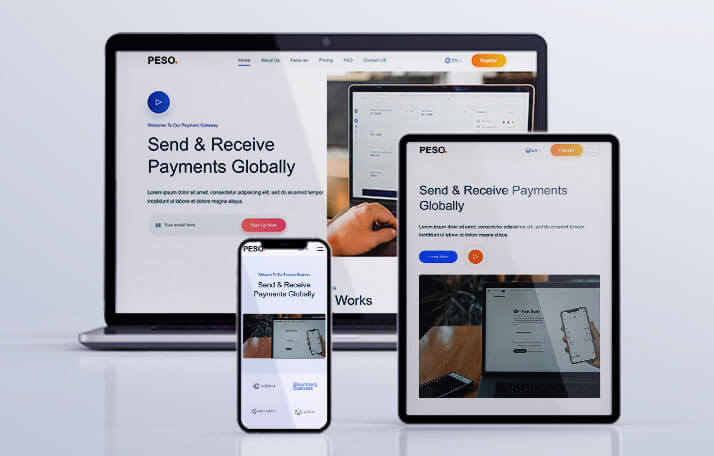
PESO – Fintech Payment App React & Next.js Template
PESO is a responsive React Next.js payment app landing page template built for blockchain platforms, digital currency exchanges, payment gateways, and fintech app promotions overall.

MONO – React Next.js Resume & CV Portfolio Template
MONO is a multipurpose, clean, and customizable React Next.js personal portfolio template built for React developers presenting resumes, CVs, and minimalist portfolio websites today.

PORTO – React Next.js Website & App Landing Page Template
PORTO is a unique, creative, multipurpose React Next.js website template built for app landing pages, startups, portfolios, SaaS products, software promotions, and single-page sites.

ORYO – React & Next.js Templates for SaaS & Startups
ORYO is a modern React and Next.js template collection built for SaaS products, startups, and app landing pages, fully responsive, SEO-friendly, and optimized for high conversion rates.
Use code FIRST30 at checkout — valid across every Bootstrap, Angular, and React
template.