
PORTO – React Next.js Website & App Landing Page Template
PORTO is a unique, creative, multipurpose React Next.js website template built for app landing pages, startups, portfolios, SaaS products, software promotions, and single-page sites.
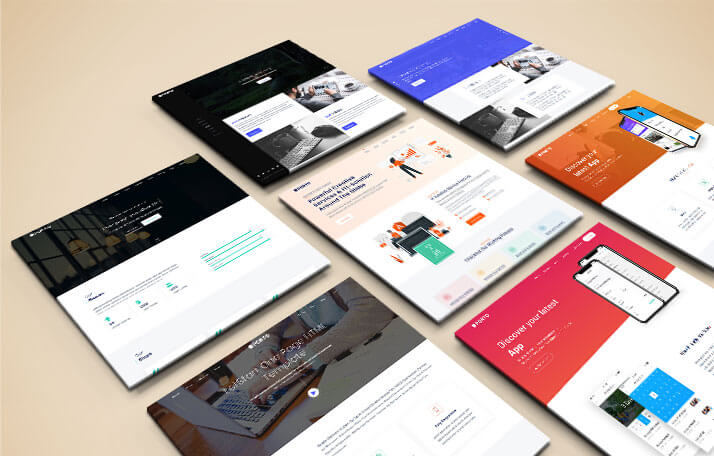
See every module before you buy
Each screenshot opens the full PORTO – React Next.js Website & App Landing Page Template live preview, where you can browse the live preview and documentation.


Overview
About PORTO
PORTO's design reputation was built on Bootstrap, but React and Next.js teams deserve the same depth without stepping outside their chosen framework or maintaining a second, disconnected codebase requiring separate tooling and expertise. PORTO – NextJS Website Templates and App Landing Pages delivers exactly that: a unique, creative, and multipurpose Next.js website template perfect for Next.js app landing pages, startups, portfolios, SaaS, minimal software promotion, PPC campaigns, and single or one-page sites.
PORTO React carries forward the same multipurpose design philosophy that made the original PORTO a best-selling template — 15+ homepage variations and a full set of supportive pages — but rebuilt as genuine React and Next.js components rather than plain HTML. That distinction matters directly for React teams, where a marketing site built in the same framework as the product removes the friction of maintaining two disconnected codebases with different tooling and different developers.
The template is well suited for React-based startups launching a first marketing site, SaaS companies presenting a product natively within their React application, software companies promoting their product through PPC and organic channels, and portfolio sites built by React developers who want their own site to reflect their technical stack. PORTO React's design language holds up across all of these without requiring extensive customization.
Optimized Image and Asset Loading
Next.js's built-in image optimization keeps page load times fast even with rich visual content, an important factor for both user experience and search ranking performance across every device type.
Why Next.js Gives PORTO a Real Performance Edge
A landing page's conversion rate is directly tied to how quickly it loads, and Next.js's server-side rendering capabilities give PORTO React a genuine performance advantage over plain HTML pages retrofitted with React. That advantage translates directly into faster load times and better SEO performance, both of which matter for startups and SaaS products relying on organic discovery and paid campaign traffic to grow their user base without an unlimited advertising budget.
There's also a product-alignment argument specific to React-based companies. When the actual product is built in React, having the marketing site built in the same technology means the same development team can maintain both without switching contexts, and shared components — design tokens, form validation, authentication UI — can be reused directly between the marketing site and the product itself rather than duplicated across disconnected codebases requiring separate maintenance and separate mental models to work with effectively.
There's also a hiring and team-culture dimension worth mentioning. Developers evaluating a company as a potential employer often look at the company's own marketing site as a signal of engineering quality and attention to detail. A React-focused company running its marketing site on mismatched or outdated technology can send an unintended signal about the seriousness of its engineering culture, which matters directly for recruiting in a competitive market for React and Next.js talent.
Sticky and Normal Menu Variations
Multiple navigation styles are available as React components, letting the header match the visual weight needed for whichever homepage variant has been selected for a given project.
Key Features of PORTO React and Next.js
Built on React and Next.js
A modern, well-supported technical foundation gives React teams a genuine component-based website built with the same conventions used consistently throughout their broader application and codebase.
15+ Homepage Variations
Multiple homepage layouts, delivered as genuine React components, give real flexibility in how a startup, agency, or SaaS product presents itself without forcing every use case into an identical, rigid structure.
Supportive Pages Included
Authentication screens, blog listing and detail pages, and contact pages come built as genuine React components, rounding out a complete site rather than leaving these important pages as an afterthought.
Next.js-Optimized SEO and Performance
Server-side rendering support gives PORTO React strong search visibility and fast load times, both of which matter directly for organic discovery and PPC campaign conversion.
Fully Responsive Design
The template adapts cleanly across desktops, tablets, and mobile devices, ensuring a professional presentation regardless of how or where a visitor arrives at the page from.
Single and One-Page Layout Options
For projects that need a focused, single-scroll presentation, PORTO React includes dedicated one-page layout options alongside its multi-page structure.
Easy to Customize Components
Sections are built as distinct, editable React components, making it straightforward to adjust layout, content, and styling without disturbing the rest of the application.
Parallax Scrolling Effects
Several homepage variants include parallax scrolling sections, giving pages a genuine sense of depth and motion that helps hero sections and feature showcases stand out visually.
Image Lightbox and Sorting
An integrated image lightbox with portfolio sorting and filtering, built as native React components, lets developers and agencies showcase work in a polished, interactive way.
Dark and Light Menu Options
Both dark and light menu variants come as ready-to-use React components, giving teams flexibility in how the header presents itself against different homepage color schemes.
Detailed Documentation and 1 Year Support
Setup documentation and a year of dedicated support are included with every purchase, helping React teams get the template integrated into their workflow quickly.
Who Should Use PORTO React
PORTO React is a strong fit for React-first startups that want the same design quality PORTO built its reputation on, delivered natively within their existing React tooling and deployment pipeline. A founding team already committed to React for their product shouldn't have to compromise on design quality just because most premium templates are built in plain HTML; PORTO React removes that tradeoff entirely by delivering the exact same visual polish as a genuine, well-structured React codebase.
SaaS companies building their product's marketing site directly in React benefit from PORTO's homepage variety and supportive pages, all integrated cleanly into the same codebase as the product itself. Rather than maintaining a separate marketing site built in a different technology, a SaaS team can keep their entire web presence — marketing pages, blog, authentication, and the product itself — under one React roof, sharing components, build tooling, and deployment infrastructure throughout the entire application.
Software companies running PPC campaigns benefit from PORTO React's Next.js-optimized performance, since fast load times matter directly for paid traffic conversion where every second of delay measurably reduces conversion rate and effectively wastes advertising spend on visitors who bounce before ever seeing the actual offer. Portfolio sites built by React developers benefit from a design language considered polished enough to double as a demonstration of the developer's own taste and technical capability, since a personal site built in the exact framework a developer specializes in reinforces the expertise being claimed elsewhere in their application materials.
And any React team that previously relied on PORTO's Bootstrap version for inspiration can now build directly in their own framework without translation work, getting the same proven design patterns without the overhead of converting static HTML into React components themselves from scratch.
Reusable Component Library
Beyond the page-level layouts, PORTO React includes smaller reusable components — buttons, cards, navigation elements — that can be composed into new sections beyond what ships out of the box.
Choosing the Right Homepage Variant
With 15+ homepage variations available, the practical challenge shifts from having enough options to choosing the right one for a specific project's positioning. A SaaS product benefits from a feature-forward homepage that leads with product screenshots and clear value propositions, while a software promotion benefits from a conversion-forward layout optimized specifically for PPC traffic landing directly on the page. PORTO React's range supports both directions from the same underlying component library, letting teams select the variant that best matches their specific story rather than forcing every project through an identical structure regardless of what it's actually trying to communicate.
Staying Native to React Throughout
What distinguishes PORTO React from a plain HTML template with a React wrapper is that every homepage variant, every supportive page, and every component is genuine React and Next.js code sharing the same routing, state, and build tooling as the rest of an application. That consistency matters enormously for React teams specifically, since a developer extending or modifying any page in PORTO works with exactly the same patterns and conventions they'd use anywhere else in a React codebase, rather than learning a separate set of conventions just for the marketing pages.
This also means PORTO React integrates cleanly into an existing React or Next.js monorepo, sharing linting rules, testing infrastructure, and deployment pipelines with the rest of a team's projects, removing one of the more common sources of friction when adopting a new template into an already-established React development process. New team members joining the project can also onboard faster, since there's only one set of framework conventions to learn across the entire codebase rather than two separate systems requiring different mental models.
Conclusion
PORTO React Next.js brings the same elegant, multipurpose design that built the original PORTO's reputation into a genuinely native React and Next.js codebase: 15+ homepage variations, full supportive pages, Next.js-optimized performance, and a modern, fully responsive foundation. For React-first startups, SaaS companies, software promoters, and developers who need their web presence to carry PORTO's signature design quality without ever leaving the React ecosystem, PORTO React offers a dependable, comprehensive starting point built for exactly that combination.
That combination of proven, elegant design and genuine framework-native implementation is what separates PORTO React from either a generic React starter template or a plain HTML PORTO site awkwardly wrapped for React use. A team launching on PORTO React gets both the design quality that made the original template a best-seller and the technical fit that lets it integrate seamlessly into an existing React application, rather than compromising on one to get the other during a rushed launch timeline.
Related templates
The modules, laid out like the product itself
All 7 highlights, grouped the way they appear in PORTO – React Next.js Website & App Landing Page Template's own sidebar.
Built on React and Next.js
15+ Homepage Variations
Supportive Pages Included
Next.js-Optimized SEO and Performance
Fully Responsive Design
Single and One-Page Layout Options
Easy to Customize Components
What buyers are saying
Really nice template. Many UI's at an affordable price, a Perfect fit for all businesses, and easy to follow through.
Before you get started
PORTO React is a unique, multipurpose React and Next.js template built for app landing pages, startups, portfolios, SaaS, and software promotions.
Yes, every homepage variant and supportive page is built as genuine React and Next.js code sharing the same routing and conventions as the rest of an application.
Yes, its Next.js-optimized performance supports fast load times important for PPC campaign conversion.
Yes, PORTO React is fully responsive and tested across modern browsers and mobile devices.
Yes, PORTO is also available as a Bootstrap 5 template and an Angular 14 template for teams not using React.
Change log
- Changed to Next JS 15.3.1 template
- Updated dependencies
- Bug fixing
- Initial Version
PORTO – React Next.js Website & App Landing Page Template in other frameworks

PORTO – Multipurpose Bootstrap 5 Website Template
PORTO is a multipurpose Bootstrap 5, SCSS, and jQuery website template featuring 15+ homepages and app landing pages, built for SaaS, startups, portfolios, and digital agencies worldwide.
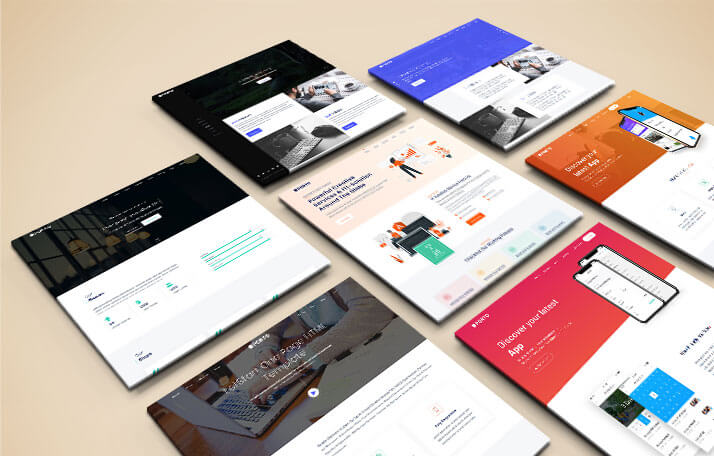
PORTO – Angular 14 Website & App Landing Page Template
PORTO is an elegant, modern, multipurpose Angular 14 website template built for app landing pages, startups, portfolios, SaaS products, digital agencies, and single-page sites today.
Related templates
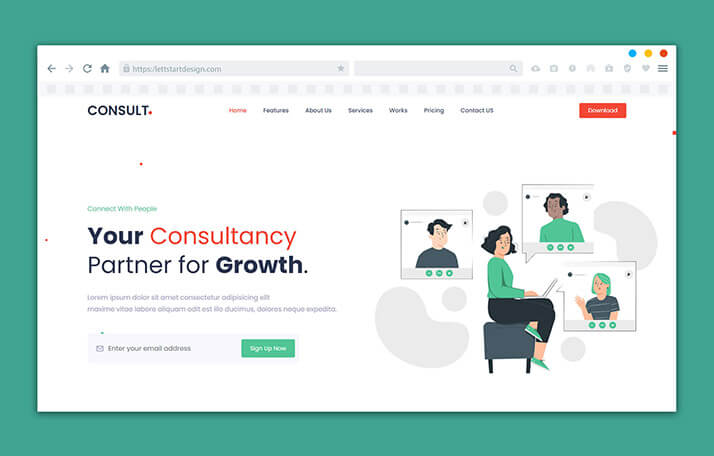
Consult – React Next.js Consultancy & Agency Landing Page
Consult is a creative and responsive Next.js website template built for agency landing pages, consultancy websites, IT services, consulting firms, and minimalist single-page sites.

Rekto – React Next.js Digital Agency Landing Page
Rekto is a modern, creative, and clean React Next.js landing page template built for digital agencies, consultancies, IT services, and focused single-page consulting websites today.
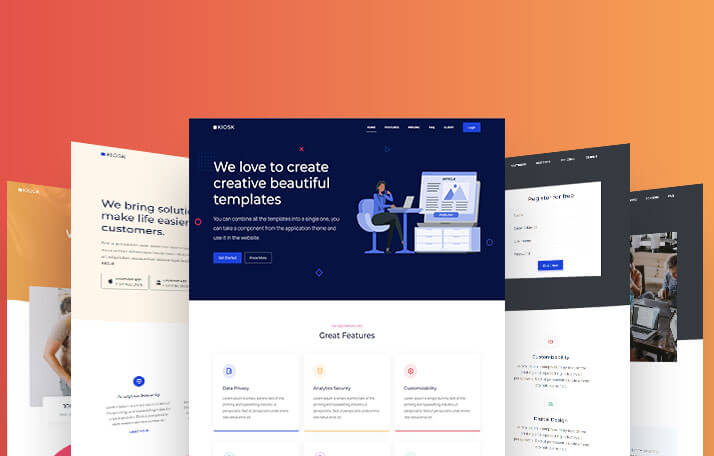
Kiosk – React & Next.js Landing Page Template
Agencies juggling client portfolios and SaaS pitches usually need two different templates. Kiosk handles both — Next.js 15, React 19, fully responsive, and SEO-ready without extra setup.
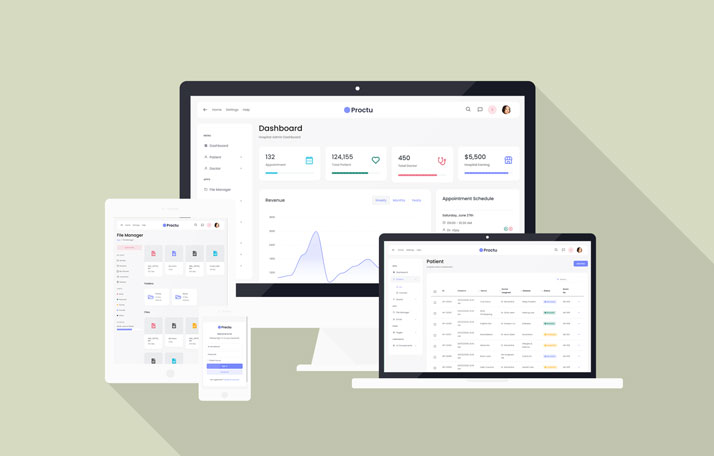
Proctu – Hospital & Medical React Next.js Admin Template
Proctu is a React Next.js framework-based admin dashboard built for patient and hospital dashboards, doctor medical admin panels, and general healthcare React dashboard applications.
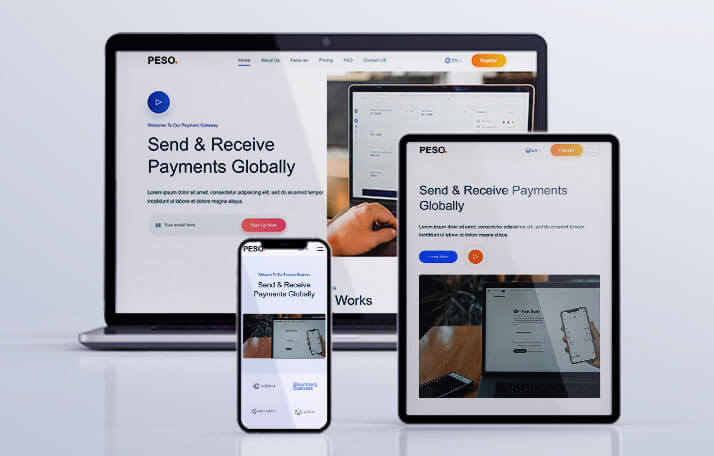
PESO – Fintech Payment App React & Next.js Template
PESO is a responsive React Next.js payment app landing page template built for blockchain platforms, digital currency exchanges, payment gateways, and fintech app promotions overall.

MONO – React Next.js Resume & CV Portfolio Template
MONO is a multipurpose, clean, and customizable React Next.js personal portfolio template built for React developers presenting resumes, CVs, and minimalist portfolio websites today.
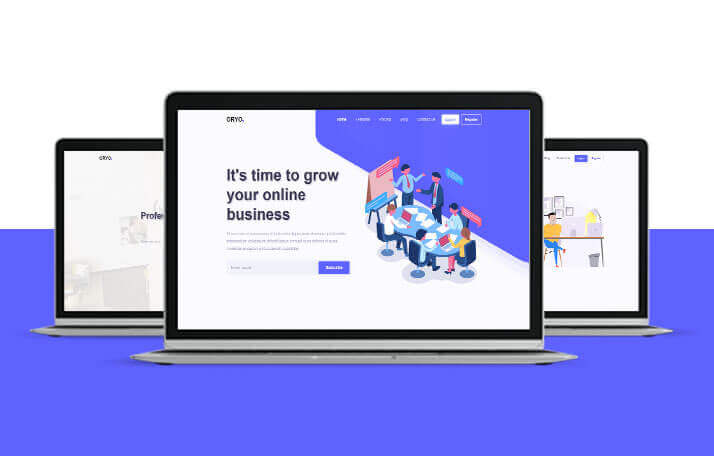
ORYO – React & Next.js Templates for SaaS & Startups
ORYO is a modern React and Next.js template collection built for SaaS products, startups, and app landing pages, fully responsive, SEO-friendly, and optimized for high conversion rates.

ECOM – React Next.js E-Commerce Website Template
ECOM is a simple, fully-featured React Next.js e-commerce website template built with product listings, cart, and checkout flow, perfect for launching an online store quickly today.
Use code FIRST30 at checkout — valid across every Bootstrap, Angular, and React
template.