
MONO – React Next.js Resume & CV Portfolio Template
MONO is a multipurpose, clean, and customizable React Next.js personal portfolio template built for React developers presenting resumes, CVs, and minimalist portfolio websites today.

See every module before you buy
Each screenshot opens the full MONO – React Next.js Resume & CV Portfolio Template live preview, where you can browse the live preview and documentation.


Overview
About MONO
React developers building a personal resume or portfolio site face a small but real irony if their site isn't itself built in React — the technology they're presenting expertise in isn't the technology carrying that presentation, which can quietly undercut the very claim the site is meant to support. MONO – React Next.js Websites and CV Portfolio Templates closes that gap directly, offering a multipurpose, clean, flexible, and customizable personal portfolio Next.js website template ideal for React portfolio and resume websites built by developers who take their own presentation as seriously as their client work.
MONO's minimalist design language strips away unnecessary decoration, letting typography, spacing, and the actual content — work samples, experience, credentials — carry the visual weight instead, delivered as genuine React and Next.js components rather than static HTML wrapped in a framework shell. That distinction matters specifically for React developers, where the site's own technical execution becomes an implicit part of the professional case being made to a reviewer, whether or not that reviewer consciously articulates it that way.
The template covers the core sections a resume or portfolio site needs: an introduction, experience and skills presentation, work samples, and a clear way to get in touch, all delivered through MONO's signature restrained aesthetic and genuine React component architecture. That structure suits React and Next.js developers who want a genuinely clean, minimalist personal site that also functions as a working demonstration of their technical capability.
Testimonials Section
An optional testimonials or references component lets developers include third-party validation of their work directly on the page, adding a layer of social proof beyond self-reported skills.
W3C Validated Semantic Markup
The rendered markup follows semantic structure and passes standard validation checks, giving the portfolio a clean technical foundation that reinforces the code quality being demonstrated.
Why React-Native Minimalism Matters for Developers
For a React developer specifically, a personal portfolio isn't just a presentation of past work — it's itself a live sample of current technical execution. A prospective employer or client reviewing a React developer's portfolio is often at least somewhat technically literate, and will likely notice whether the site's own implementation reflects genuine React fluency or was built through a simpler, non-React route dressed up to look modern with a coat of contemporary-looking styling.
MONO's genuine React and Next.js foundation holds up to that kind of scrutiny directly. Server-side rendering through Next.js supports fast load times and strong SEO performance, both of which matter for a personal site meant to surface when someone searches a developer's name, while the underlying component architecture gives a technically literate reviewer exactly the kind of clean, well-structured code they'd hope to find from a candidate claiming React expertise on their resume.
There's also a practical maintenance advantage for the developer themselves. A React portfolio can be extended and updated using the exact same skills, tooling, and mental models the developer already applies to client or employer projects, rather than requiring a context switch into an unfamiliar plain-HTML codebase just to add a new project or update a bio. That familiarity means the portfolio actually gets kept current more reliably than one built in a technology the developer rarely touches in their day-to-day work.
Downloadable Resume Option
A downloadable PDF resume link can be included alongside the interactive React page, giving visitors who still prefer a traditional document format an easy way to save or forward a candidate's credentials.
Fully Mobile Responsive
Every element holds up correctly across mobile, tablet, and desktop screen sizes, a non-negotiable requirement for a personal site that expects meaningful traffic from recruiters browsing on mobile.
Blog and Writing Section
An optional blog or writing component gives developers a place to demonstrate technical thinking through articles, tutorials, or project write-ups, all built as native React pages within the same site.
Key Features of MONO React Next.js
Built on React and Next.js
A modern, well-supported technical foundation gives React developers a genuine component-based personal site built with the same conventions used consistently throughout their professional work and client projects.
Clean, Minimalist Design
MONO's visual language strips away unnecessary decoration, relying on strong typography and thoughtful spacing to create a page that feels considered rather than busy.
Experience and Skills Components
Dedicated React components for presenting work history, skills, and qualifications give visitors a clear, scannable overview of a developer's professional background and career trajectory.
Next.js-Optimized SEO and Performance
Server-side rendering support gives MONO strong search visibility and fast load times, helping the portfolio surface when a prospective employer or client searches a developer's name.
Fully Responsive Design
The template adapts cleanly across desktops, tablets, and mobile devices, ensuring a professional presentation regardless of how a visitor arrives at the page.
Integrated Contact Form
A working contact form built as a React component gives prospective employers or clients a direct way to reach out, wired using consistent validation patterns.
Easy to Customize Components
Sections are built as distinct, editable React components, supporting quick personalization of content and structure to match a developer's own professional story.
TypeScript-Ready Codebase
MONO's component structure is straightforward to extend with TypeScript for developers who want type safety and stronger editor tooling as they customize the template further.
Reusable Component Architecture
Sections and smaller elements are built to be composed and reused, letting a developer extend the portfolio with new project entries or sections without duplicating markup.
Detailed Documentation and 1 Year Support
Setup documentation and a year of dedicated support are included with every purchase, helping developers get the template integrated into their workflow quickly.
Who Should Use MONO React
MONO React is a strong fit for React and Next.js developers who want their personal portfolio to double as a working demonstration of their technical capability, rather than a plain HTML site that quietly undercuts their own claimed expertise. When a developer applies for a React-focused role or pitches React development services, the personal portfolio is often the first real evidence a reviewer has of their actual coding style, and a portfolio built in a different technology quietly contradicts the expertise being claimed elsewhere in the application.
Freelance React developers pitching client work benefit particularly from this dual function, since a prospective client evaluating a freelancer's React skills can inspect the freelancer's own site as a real, verifiable data point rather than relying purely on written claims or a curated list of past projects that the client can't directly interact with or inspect themselves.
Job seekers applying to React-focused roles can use MONO to signal technical currency directly through their application materials, giving hiring managers and technical interviewers a genuine artifact to review alongside a resume, one that holds up to the kind of technical scrutiny a React-savvy interviewer is likely to apply when evaluating a candidate's actual coding practices.
And developers who personally favor a minimalist design philosophy in their own work can use MONO as an authentic expression of that same restraint applied to their personal site, rather than settling for a template whose default aesthetic contradicts their own design sensibility and professional taste.
A Portfolio That Proves Its Own Claims
The strongest argument for MONO React over a plain HTML alternative is structural rather than stylistic: a React developer's portfolio built in React is simply a more credible artifact than one built in a different technology and merely styled to look contemporary. Every interaction, every load time, every piece of the site's technical execution either reinforces or quietly undermines the specific expertise being claimed on the page, whether or not a visitor consciously notices the underlying implementation choice.
MONO's minimalist aesthetic pairs naturally with this goal. Because the design itself is restrained, there's little room for visual flourish to distract from or compensate for weak technical execution — the site's quality has to come through in its actual performance and code structure, which is exactly the kind of substance-over-style signal a technically sophisticated reviewer is looking for when evaluating a developer's real capability rather than their design taste alone.
Making Minimalism Work Without Feeling Bare
The challenge with minimalist design, whether built in plain HTML or React, is avoiding the trap of feeling merely empty rather than genuinely considered. MONO React addresses this through careful attention to typography, spacing rhythm, and the small component-level details that separate intentional restraint from an unfinished-looking page — consistent margins, a well-chosen type scale, and enough whitespace to let content breathe without feeling sparse or incomplete.
Getting the most from MONO React means resisting the urge to fill every available section just because the template includes the option. A developer's portfolio built with MONO's philosophy in mind should include only the projects and content that genuinely earn their place, trusting that a tightly edited page respects a visitor's time more than a longer one padded with lower-value content ever could, particularly for a technical audience that values signal over volume.
Conclusion
MONO React Next.js brings genuine framework-native thinking to the minimalist resume and portfolio category: a clean, restrained design language, dedicated experience and skills components, Next.js-optimized performance, and genuine React architecture built to demonstrate the exact expertise a developer is presenting. For React and Next.js developers who want their personal site to project confidence through both design restraint and technical substance, MONO React offers a distinctive foundation built for exactly that combination.
That combination of minimalist design and genuine framework-native implementation is what separates MONO React from either a plain HTML minimalist template or a generic React portfolio starter kit. A developer launching their portfolio on MONO React gets both the restraint that lets real work speak for itself and the technical substance that quietly proves the expertise being claimed, addressing two needs most competing options only manage to solve one of at a time.
Related templates
The modules, laid out like the product itself
All 7 highlights, grouped the way they appear in MONO – React Next.js Resume & CV Portfolio Template's own sidebar.
Built on React and Next.js
Clean, Minimalist Design
Experience and Skills Components
Next.js-Optimized SEO and Performance
Fully Responsive Design
Integrated Contact Form
Easy to Customize Components
What buyers are saying
The theme is easy to design and it has many features and functionalities. I really like the completed website.
Before you get started
MONO is a clean, minimalist React and Next.js template built for React developers presenting resumes, CVs, and personal portfolios.
Yes, every section is built as genuine React and Next.js code rather than static HTML wrapped in a framework shell.
It is ideal for React and Next.js developers, freelancers, and job seekers who want their portfolio to demonstrate genuine technical capability.
Yes, it is fully responsive and tested across modern browsers and mobile devices.
Yes, MONO is also available as a Bootstrap resume and CV portfolio template for developers not using React.
Change log
- Changed to Next JS 15.3.1 template
- React 19 Updation
- Updated dependencies
- Bug fixing
- Initial Version
MONO – React Next.js Resume & CV Portfolio Template in other frameworks

Related templates

Consult – React Next.js Consultancy & Agency Landing Page
Consult is a creative and responsive Next.js website template built for agency landing pages, consultancy websites, IT services, consulting firms, and minimalist single-page sites.

Rekto – React Next.js Digital Agency Landing Page
Rekto is a modern, creative, and clean React Next.js landing page template built for digital agencies, consultancies, IT services, and focused single-page consulting websites today.
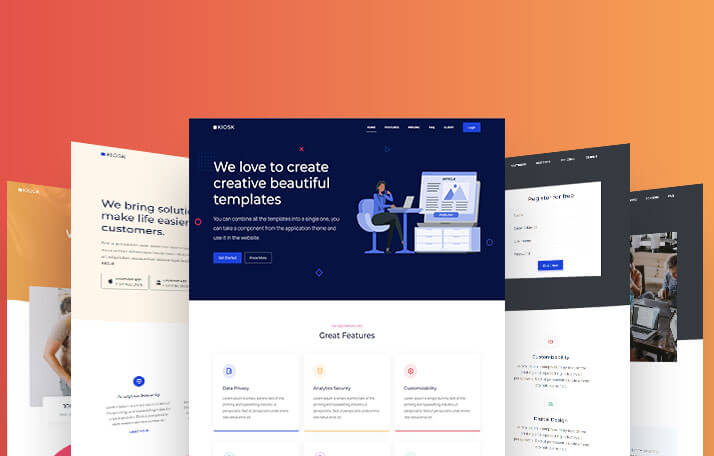
Kiosk – React & Next.js Landing Page Template
Agencies juggling client portfolios and SaaS pitches usually need two different templates. Kiosk handles both — Next.js 15, React 19, fully responsive, and SEO-ready without extra setup.

Proctu – Hospital & Medical React Next.js Admin Template
Proctu is a React Next.js framework-based admin dashboard built for patient and hospital dashboards, doctor medical admin panels, and general healthcare React dashboard applications.

PESO – Fintech Payment App React & Next.js Template
PESO is a responsive React Next.js payment app landing page template built for blockchain platforms, digital currency exchanges, payment gateways, and fintech app promotions overall.

PORTO – React Next.js Website & App Landing Page Template
PORTO is a unique, creative, multipurpose React Next.js website template built for app landing pages, startups, portfolios, SaaS products, software promotions, and single-page sites.

ORYO – React & Next.js Templates for SaaS & Startups
ORYO is a modern React and Next.js template collection built for SaaS products, startups, and app landing pages, fully responsive, SEO-friendly, and optimized for high conversion rates.

ECOM – React Next.js E-Commerce Website Template
ECOM is a simple, fully-featured React Next.js e-commerce website template built with product listings, cart, and checkout flow, perfect for launching an online store quickly today.
Use code FIRST30 at checkout — valid across every Bootstrap, Angular, and React
template.