
Letstart – Minimal Bootstrap 5 Admin Dashboard Template
Letstart is a minimal, modern Bootstrap 5.3 admin dashboard template with 70+ pages and 100+ components, built with Sass and jQuery for eCommerce panels and HTML back-end dashboards.

See every module before you buy
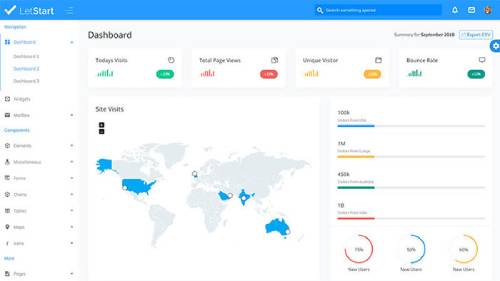
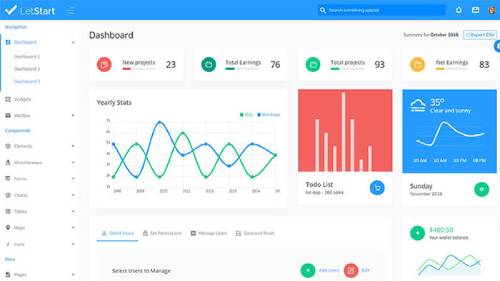
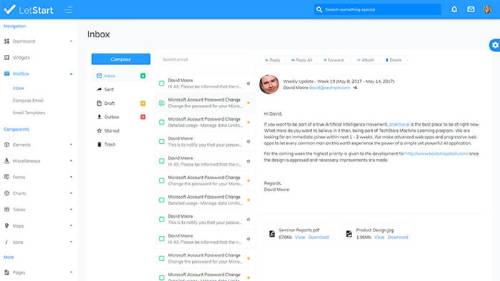
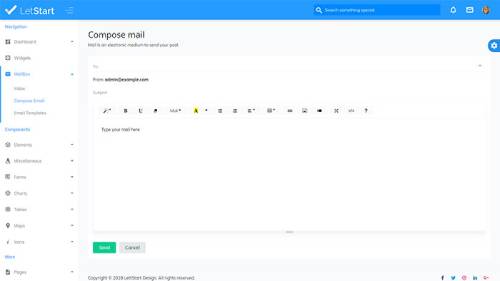
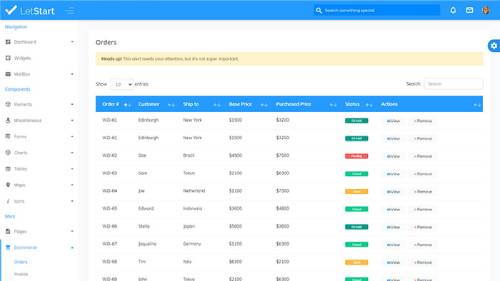
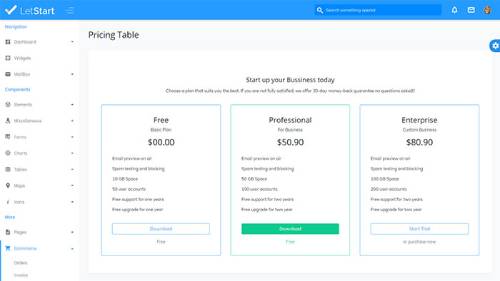
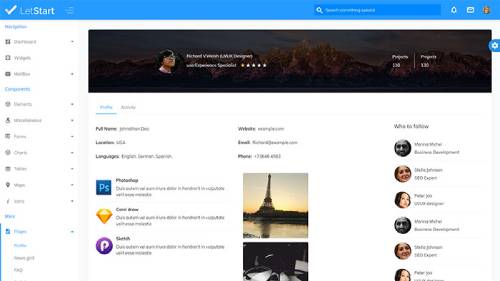
Each screenshot opens the full Letstart – Minimal Bootstrap 5 Admin Dashboard Template live preview, where you can browse the live preview and documentation.


Overview
About Letstart
An admin dashboard serves as the brain of any web application, offering administrators a comprehensive snapshot of crucial metrics, data insights, and management tools in one centralized location. Most admin templates try to solve that problem by piling on visual weight — dense sidebars, saturated color schemes, dozens of competing widgets fighting for the same limited screen space. Letstart – Bootstrap 5 Minimal Admin Dashboard Template takes the opposite approach: a minimal, modern, and responsive template built on Bootstrap 5.3.3 with Sass, jQuery, and HTML5, designed to make data easier to read rather than harder.
Letstart is built for multipurpose admin dashboards, minimal Bootstrap 5 admin panels, eCommerce websites, analytics dashboard panels, HTML5 admin dashboards, and general management admin panels. Rather than trying to be everything to everyone through visual excess, it commits to a restrained design language that stays legible and calm even when a screen is packed with charts, tables, and metrics — which is exactly the situation most admin dashboards actually face in daily use, day after day, month after month.
The template delivers real-time insight support, customizable features, and collaborative tooling patterns, empowering administrators to manage assets and propel business operations effectively across departments and teams. Its adaptability spans multipurpose HTML admin panels, SaaS dashboards, analytics interfaces, and eCommerce platforms, with seamless design compatibility that also extends toward Angular and React dashboard patterns for teams that later migrate to a component framework as their product and engineering organization mature.
Why a Minimal Admin Dashboard Matters
Admin dashboards are working tools, not marketing pages — the people using them are typically staring at the same screens for hours at a time, day after day, trying to extract specific information quickly under time pressure. A visually loud dashboard with excessive color, unnecessary animation, and competing visual hierarchy makes that job measurably harder, adding cognitive load exactly where clarity matters most. Letstart's minimal design philosophy is a direct response to that reality: reduce visual noise so that actual data — the numbers, trends, and alerts that matter — gets the attention it deserves.
This restraint also pays off during customization. A minimal base design is inherently easier to rebrand than a heavily styled one, since there are fewer competing visual decisions to override when adapting the dashboard to match a specific company's brand colors and typography. Teams building internal tools, SaaS backends, or client-facing admin panels can layer their own branding onto Letstart's clean foundation without fighting against an opinionated visual style baked into the template from the start.
There's also an onboarding benefit that's easy to overlook. New team members joining a company and encountering an internal admin tool for the first time tend to ramp up faster on a clean, predictable interface than on one crowded with decorative elements competing for attention alongside the actual functional controls. A minimal dashboard reduces the amount of visual "noise" a new hire has to mentally filter out before they can start reliably finding the specific tools and data they need for their role.
Key Features of Letstart Bootstrap 5 Admin Dashboard
3 Dashboard Variants
Letstart ships with three distinct dashboard variants, giving teams a starting layout that already leans toward their specific use case — whether that's a general analytics view, an eCommerce-focused panel, or a more data-dense reporting layout for larger operations teams.
70+ Page Templates
More than seventy pre-built pages cover the full range of screens a typical admin panel needs: authentication, settings, data tables, forms, and more, considerably reducing the amount of new UI that has to be designed and built from scratch for a real, launch-ready project.
100+ Components
A large component library covers buttons, cards, alerts, modals, and other common interface elements, all styled consistently within Letstart's minimal design system.
Widgets and Component UI
Reusable stat cards, mini charts, and summary widgets are included, giving dashboards an at-a-glance overview layer without needing to build custom summary components for every project.
eCommerce and Other UI
Pre-built eCommerce pages — product lists, orders, and related screens — give online store admin panels a real head start, alongside other miscellaneous UI patterns for general business use.
Forms Validation
Form components come with validation logic already wired up, so data entry screens function correctly without needing custom validation code written from scratch for every form.
ChartJs, Chartist, C3 and Other Chart Plugins
Multiple charting libraries are integrated, giving flexibility in how data gets visualized depending on the specific chart types a project needs — line charts, bar charts, pie charts, donut charts, and more advanced visualization types.
Datatables
Sortable, searchable data tables are included for presenting larger datasets in a structured, easily navigable way, a near-universal requirement across nearly every admin dashboard use case.
Miscellaneous UI and Email UI
Additional utility pages and a built-in email interface round out the template, covering the less glamorous but frequently needed screens that a complete admin panel eventually requires.
Who Should Use Letstart
Letstart suits development teams building internal tools where clarity and speed of comprehension matter more than visual flash — operations dashboards, inventory systems, and reporting panels used daily by staff who need to extract information quickly rather than be impressed by the interface. In these environments, a dashboard that looks visually impressive in a demo but tires the eyes after an hour of real use is actually a liability, and Letstart's restrained design is built specifically to hold up under that kind of sustained daily use rather than just a first glance.
SaaS companies building their product's admin or settings area benefit from Letstart's calm, unobtrusive design language, which tends to age better and require less frequent redesign than more trend-driven, heavily styled dashboard templates. A settings or account management area rarely benefits from bold visual statements; it benefits from being predictable, fast to scan, and easy to navigate, which is precisely what a minimal design system delivers.
Agencies building client back-office systems can use Letstart as a dependable, easily-rebranded starting point across multiple concurrent client engagements, since the minimal base design accepts custom branding cleanly without requiring extensive rework or redesign from the ground up each time. This is particularly valuable for agencies juggling several concurrent client projects at once, where reusing a proven, adaptable dashboard foundation across engagements saves meaningful development time and budget compared to starting each admin panel build from a blank project every single time.
And teams early in a product's life who need a functional admin panel fast — before investing in a fully custom internal tool built from a blank slate — can rely on Letstart's 70+ pages and 100+ components to cover the vast majority of screens needed for launch, filling in only the genuinely custom pieces themselves. This is often the more pragmatic path for early-stage companies: rather than delaying an internal launch while a bespoke admin system gets built, teams can get a working, professional-looking dashboard live quickly and revisit custom development only for the specific workflows that genuinely need it.
Scaling and Maintaining a Letstart Dashboard
Because Letstart is built on Sass with a structured variable system, adjusting the dashboard's visual identity — primary color, sidebar styling, typography — typically comes down to editing a handful of core files rather than combing through individual page templates one by one. That matters for teams that expect their admin panel to grow well beyond its initial launch scope, since new pages and features added later inherit the same design system automatically rather than requiring manual restyling to stay consistent.
The inclusion of three dashboard variants also gives teams room to evolve without switching templates entirely. A project that starts with a simpler analytics-focused layout can migrate toward a more data-dense variant as its reporting needs grow, all while staying within the same underlying component library and avoiding the disruption of adopting an entirely new admin framework partway through a product's life. This kind of continuity matters more than it might seem at first — every framework migration carries hidden costs in retraining staff on a new interface and re-testing every workflow that depends on the dashboard, costs that staying within one evolving template family largely avoids over the life of a growing product.
Long-term maintenance is further supported by the breadth of the component library itself. When a new feature requirement comes up months or years after initial launch, there's a reasonable chance the needed UI pattern — a particular table layout, a specific form control, a chart type — already exists somewhere in Letstart's 100+ components, meaning the team can often assemble a new page from existing pieces rather than designing and building an entirely new component from scratch.
Conclusion
Letstart Bootstrap 5 Minimal Admin Dashboard Template delivers real-time insights, customizable features, and collaborative tools in a package that prioritizes clarity over visual excess. With three dashboard variants, 70+ pages, 100+ components, integrated charting libraries, and a Sass-based foundation built for easy rebranding, Letstart empowers administrators to manage assets and propel business operations effectively across a wide range of applications — from SaaS admin panels to eCommerce backends and general management dashboards.
What, in the end, distinguishes Letstart from more visually aggressive alternatives is its bet that a dashboard's real job is to disappear into the background and let the data do the talking. For teams that will be staring at these screens every working day, that bet consistently pays off — not through a flashier demo, but through a tool that stays comfortable to use long after the initial launch excitement has worn off, without the visual clutter that makes so many admin templates harder to use than they need to be.
Related templates
The modules, laid out like the product itself
All 11 highlights, grouped the way they appear in Letstart – Minimal Bootstrap 5 Admin Dashboard Template's own sidebar.
3 Dashboard Variants
70+ Page Templates
100+ Components
Widgets & Summary Cards
eCommerce and Other UI
Forms Validation
ChartJs, Chartist, C3 Chart Plugins
Datatables
Miscellaneous UI
Email UI
Built on Bootstrap 5.3.3, Sass, and jQuery
What buyers are saying
The template is very customizable, we used it to develop a very big admin and it worked very fine.
The template is very beautiful, easy to understand about the concept of the code
Before you get started
Letstart is a minimal, modern admin dashboard template built with Bootstrap 5.3.3, Sass, and jQuery, offering 70+ pages and 100+ components.
Letstart includes 3 distinct dashboard variants, giving flexibility depending on the specific use case.
Yes, Letstart includes dedicated eCommerce UI pages such as product lists and order management screens.
Letstart integrates ChartJs, Chartist, C3, and other chart plugins for flexible data visualization.
Yes, its Sass-based variable system makes it straightforward to update colors, typography, and sidebar styling across the entire dashboard.
Change log
- bug fixing
- Remove library which doesn't support Bootstrap 5
- Updated to Bootstrap 5.3
Letstart – Minimal Bootstrap 5 Admin Dashboard Template in other frameworks

Related templates

Marvel – Bootstrap Admin Dashboard Template for SaaS & CRM
Marvel is a Bootstrap 5.3 admin dashboard template with 135+ pages, 350+ components, and prebuilt Kanban, invoice, and eCommerce UI, built for SaaS, CRM, and analytics platforms alike.
Adminox – Angular 22 Admin Dashboard with 70+ Components
Adminox is a modern Angular 22 admin dashboard starter with 40+ pages, 6 layouts, 3 chart libraries, JWT auth, and NgRx Signals, ready for SaaS, CRM, and analytics projects from day one.
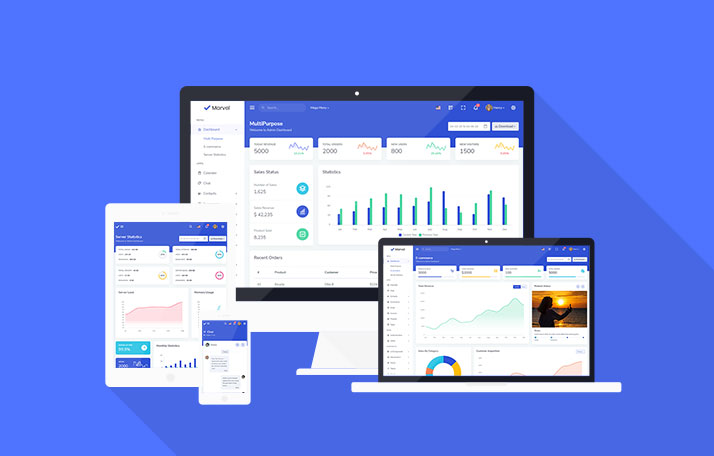
Marvel – Angular Admin Dashboard Template for SaaS & CRM
Marvel is an Angular 21 admin dashboard template with 120+ pages, 350+ components, and prebuilt Kanban, invoice, and eCommerce UI, built for SaaS, CRM, and analytics platforms alike.
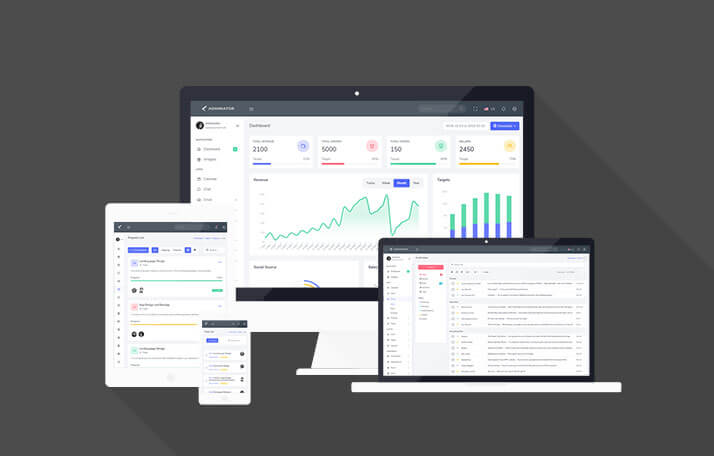
Adminator – Bootstrap 5 Admin Dashboard & Panel Template
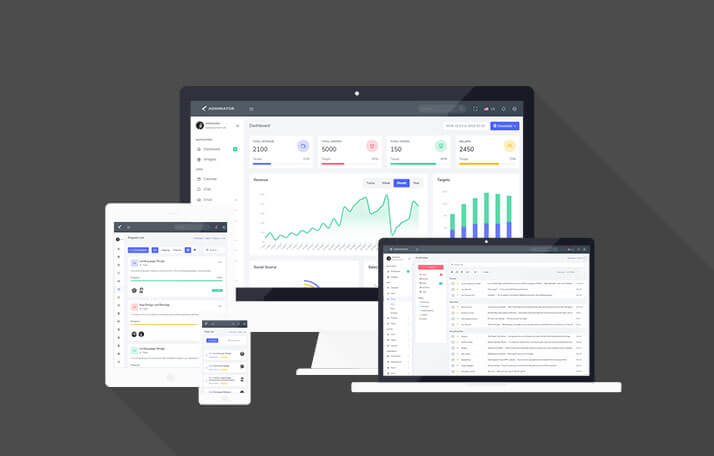
Adminator is a clean, modern Bootstrap 5 admin dashboard template built with SCSS and jQuery, ideal for eCommerce panels, analytics dashboards, and project management admin panels.

Proctu – Hospital & Medical Bootstrap Admin Template
Proctu is a Bootstrap framework-based admin dashboard panel built for patient and hospital dashboards, doctor medical admin panels, and general healthcare HTML dashboard applications.

APIC – Bootstrap Admin Dashboard for SaaS & Analytics
APIC is a responsive, creative, and modular Bootstrap admin dashboard template, ideal for sales and analytics dashboards, management panels, and general SaaS-based admin interfaces.
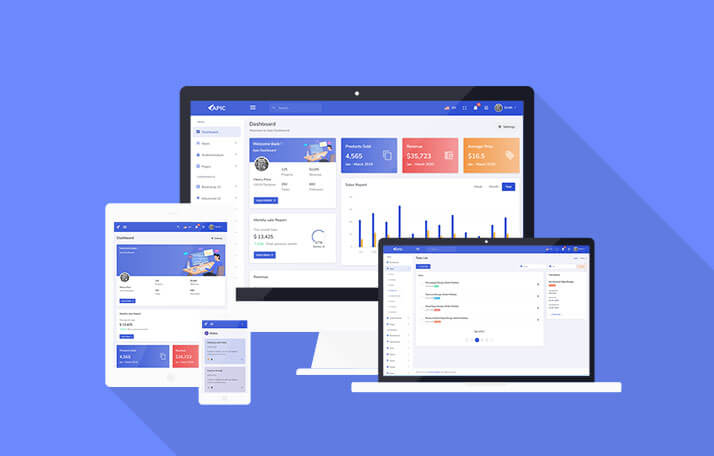
APIC – Angular 22 Admin Dashboard Template for SaaS & CRM
APIC is a multipurpose, creative, and modular Angular 22 admin dashboard template, ideal for sales and analytics dashboards, management panels, and SaaS-based admin interfaces overall.
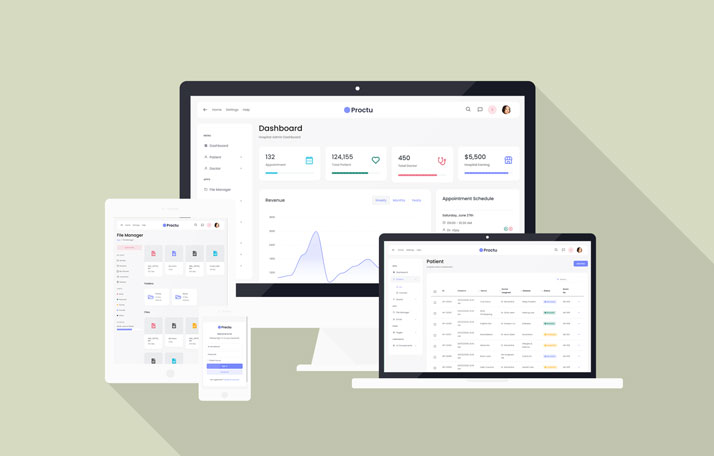
Proctu – Hospital & Medical React Next.js Admin Template
Proctu is a React Next.js framework-based admin dashboard built for patient and hospital dashboards, doctor medical admin panels, and general healthcare React dashboard applications.
Use code FIRST30 at checkout — valid across every Bootstrap, Angular, and React
template.