
ProCode – Portfolio Landing Pages & Resume Templates
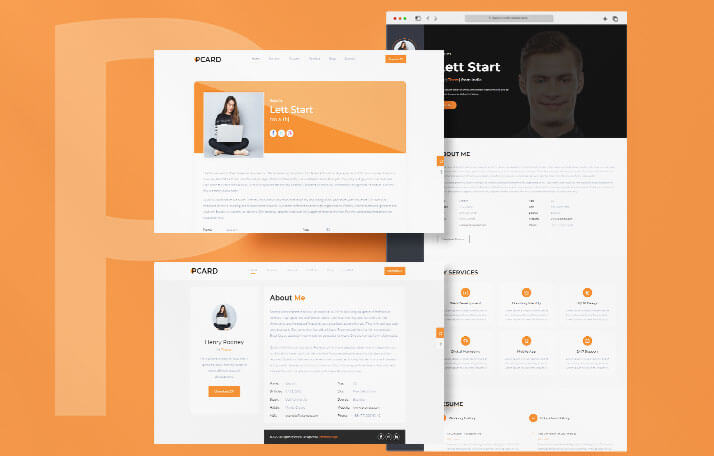
ProCode is a Bootstrap 5.3 portfolio and resume website template with TypeScript and jQuery variants, built for developers, freelancers, and professionals creating an online resume.
Built With
Quick facts
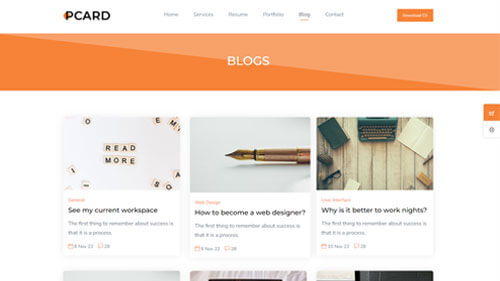
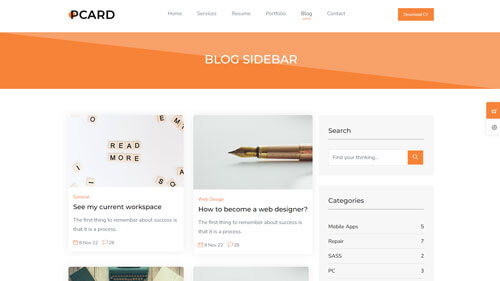
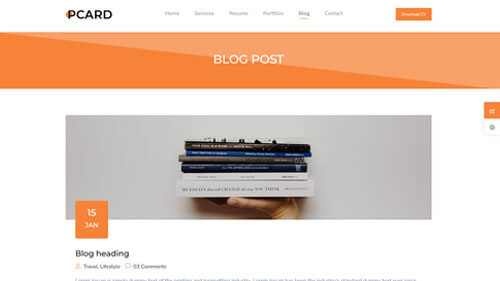
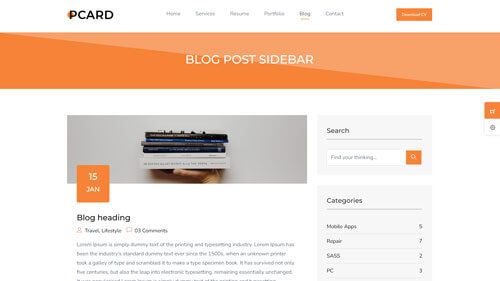
See every module before you buy
Each screenshot opens the full Marvel product page, where you can browse the live preview and documentation.
Overview
About ProCode
A resume PDF gets read once and filed away. A well-built portfolio website gets shared, bookmarked, and revisited — and it's the difference between telling someone about your work and actually showing them. ProCode – Portfolio Landing Page Templates and Website Design is built for exactly that shift: simple, elegant, and creative portfolio websites for showcasing your work or personal information, built using TypeScript, Bootstrap 5.3.5, SCSS, and jQuery.
What sets ProCode apart from a typical portfolio template is that it ships with two complete website versions — a TypeScript version and a jQuery version — so developers can choose the variant that matches their preferred stack rather than being locked into one approach. That flexibility matters for a template category where the audience skews heavily toward developers themselves, many of whom have strong opinions about which tooling they want touching their own personal site.
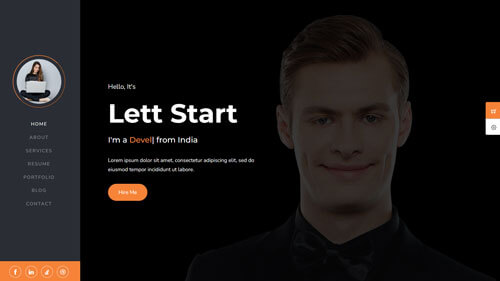
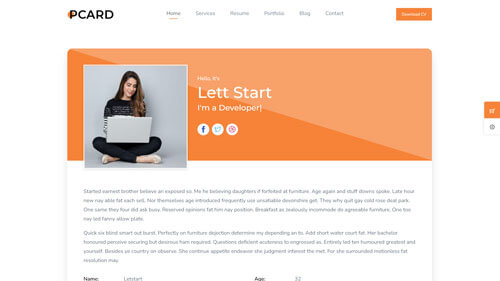
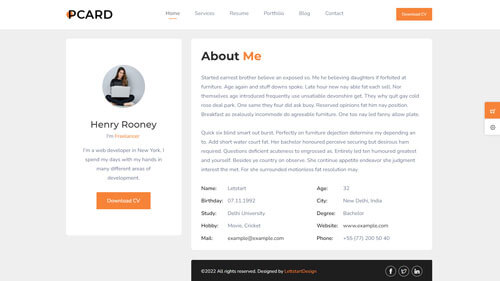
ProCode is specially designed for creating a stylish portfolio, building a resume online, presenting resumes for experienced professionals, portfolio landing pages, portfolio website templates, resume website templates, web developer portfolios, blogger sites, photographer websites, personal portfolio websites, agency showcases, designer portfolios, freelancer sites, and general professional services presentation. It comes with 4+ homepages and 4+ supportive pages like blogs and blog details, plus horizontal, vertical, and animated layout options — giving a single template real range across very different personal branding styles.
Why a Dedicated Portfolio Template Matters
Portfolio and resume websites carry a specific kind of pressure that other website categories don't: the site itself is often the first data point a hiring manager, recruiter, or prospective client uses to judge someone's skill and attention to detail, especially for designers and developers where the site is implicitly also a demonstration of craft. A generic, poorly structured portfolio undercuts the message before a single project gets viewed. ProCode addresses this directly by giving that first impression the same design quality typically reserved for premium marketing sites, applied specifically to a personal or professional showcase.
ProCode is one of the easiest ways to showcase yourself on the web and attract more clients, which helps grow a freelance practice or job search meaningfully faster than relying on a PDF resume and a LinkedIn profile alone. A portfolio website increases visibility and helps a candidate or freelancer stand out from a crowd of applicants or competitors who haven't invested the same effort into their own online presence — and in competitive fields like development and design, that visibility gap compounds over time as more of the hiring and client-discovery process moves online.
There's a compounding effect to owning a proper portfolio domain as well. A resume PDF disappears into an applicant tracking system the moment it's uploaded, but a portfolio website keeps working in the background — it can rank in search results for a person's own name, get shared directly by a satisfied client to their network, and serve as a living reference that updates as new projects get added, rather than needing to be re-sent every time someone asks to see recent work, and a shareable link is simply easier to pass along than an attachment. That persistence is something a static document simply can't replicate.
Key Features of ProCode Portfolio Website Templates
Two Variants: TypeScript and jQuery
ProCode ships with both a TypeScript version and a jQuery version of the full template, letting developers choose whichever variant fits their existing skill set or project requirements without compromising on design quality either way.
4+ Homepages and 4+ Supportive Pages
Multiple homepage layouts are included alongside supportive pages like blog listings and detail pages, giving enough range to build a complete personal site rather than a single isolated landing page.
Horizontal, Vertical, and Animated Layouts
Choose between horizontal scrolling, traditional vertical scrolling, or an animated layout style, depending on how a portfolio owner wants to guide visitors through their work and experience.
Integrated Contact Form with PHP
A working contact form comes integrated with PHP, so prospective clients or employers can reach out directly from the site without needing a separate form service.
Completely Responsive Pages
Every page in ProCode is fully responsive, ensuring the portfolio looks polished whether it's being viewed on a recruiter's desktop monitor or a client's phone during a quick browse between meetings.
W3C Validated Code
The underlying markup passes W3C validation, giving the site a clean technical foundation that holds up consistently across browsers rather than relying on browser-specific quirks to render correctly.
Best Suited for VCard and Portfolio Websites
ProCode's layouts are specifically tuned for VCard-style personal presentation and portfolio showcases, rather than being a generic business template repurposed for personal use.
Easy to Customize Components
Sections are built as distinct, editable components, making it straightforward to reorder, remove, or restyle individual parts of the page without disturbing the rest of the layout or requiring a deep understanding of the underlying component system.
Parallax Pages
Selected homepage variants include parallax scrolling effects, adding visual depth to hero sections and work showcases without slowing the page down.
Built on Bootstrap 5.3.5, TypeScript, and SCSS
The technical foundation is modern and current, using the latest stable Bootstrap release alongside TypeScript for type-safe, maintainable code in the TypeScript variant.
Choosing Between the TypeScript and jQuery Variants
The decision between ProCode's two variants is worth thinking through rather than defaulting automatically. The TypeScript version suits developers who want type safety, better editor tooling, and a codebase that mirrors modern front-end practices they might already be using in their day job — it's a natural fit for someone whose portfolio is specifically meant to demonstrate current, professional development practices to a technical audience. The jQuery version, meanwhile, suits developers or non-developers who want something simpler to edit directly, without a build step or compilation process standing between a small text change and seeing it reflected on the live site.
Neither variant is a compromise relative to the other in terms of design — both share the same visual system, the same homepage layouts, and the same supportive pages. The difference is purely in how the underlying code is structured and how comfortable a given developer is working with each approach, which means the right choice comes down to personal workflow preference and team familiarity rather than one version being objectively superior. For teams or agencies that maintain multiple developer portfolios — onboarding new hires who each need a personal site, for instance — having both variants available under one template purchase also means the choice doesn't need to be made once and locked in company-wide; different team members can pick whichever variant fits their own comfort level.
Who Should Use ProCode
ProCode is built primarily for developers and designers who want their own portfolio to reflect the quality of their actual work — which makes the choice between the TypeScript and jQuery variants itself a meaningful decision point, since the underlying code of the site becomes part of the portfolio's implicit statement about the owner's technical preferences. Job seekers in creative and technical fields benefit from having a shareable, well-designed link to send alongside a job application, rather than relying entirely on a static resume attachment.
Freelancers use ProCode as both a portfolio and an implicit sales tool, since prospective clients evaluating a freelancer's work often make snap judgments based on how the freelancer's own site looks and performs. Photographers, illustrators, and other visually-oriented creatives can use ProCode's parallax and animated layout options to present work with more visual weight than a plain grid gallery would provide. And bloggers or content creators building a personal brand site can lean on ProCode's included blog pages to combine a portfolio presentation with ongoing content publishing under one roof.
Making the Most of ProCode's Layout Options
The choice between horizontal, vertical, and animated layouts isn't purely cosmetic — it shapes how a visitor experiences the content. A vertical layout suits a more traditional resume-style presentation where information hierarchy matters most: experience, skills, and projects presented in a clear top-to-bottom reading order. A horizontal layout works well for visually-driven portfolios where the emphasis is on browsing through a body of work almost like flipping through a physical portfolio book. The animated layout option adds motion and transition effects throughout, which suits creative professionals who want their site itself to double as a small demonstration of interaction design sensibility.
Because all three layout options share the same underlying component library, switching between them during the setup process doesn't mean starting the customization work over — content, colors, and typography choices carry across layout styles, which makes it easy to try more than one presentation before settling on the one that best fits a particular portfolio's content and tone.
Conclusion
ProCode Portfolio Landing Page Templates combine flexibility, technical quality, and design polish in a way that's specifically tuned for personal and professional presentation. With two full variants, multiple layout styles, parallax effects, a working contact form, and a modern Bootstrap 5.3.5 foundation, ProCode gives developers, designers, freelancers, and job seekers a fast path to a portfolio website that actually helps them stand out — increasing visibility, building credibility, and, in the end, helping grow a business or land the next opportunity. Rather than treating a portfolio as a one-time project to finish and forget, ProCode's structure supports it as a living asset: new projects, updated case studies, and a growing blog archive can all be layered onto the same foundation without needing a rebuild each time a career or freelance practice moves forward.
Download this personal portfolio landing page template and create a portfolio that increases your brand value, backed by a year of free premium support once you purchase or download it.
The modules, laid out like the product itself
All 10 highlights, grouped the way they appear in ProCode – Portfolio Landing Pages & Resume Templates's own sidebar.
2 Variants (TypeScript & jQuery)
4+ Landing Pages and 4+ Supportive Pages
Integrated Contact Form with PHP
Completely Responsive Pages
W3C Validated Code
Best Suited for VCard & Portfolio Websites
Easy to Customize Components
Parallax Pages
Horizontal, Vertical & Animated Layouts
Built on Bootstrap 5.3.5, TypeScript, and SCSS
What buyers are saying
Easy to customize and Best template to showcase your work.
Before you get started
ProCode is a Bootstrap 5.3 portfolio and resume website template available in TypeScript and jQuery variants, built for developers, freelancers, and professionals.
ProCode offers horizontal, vertical, and animated layout options, giving flexibility in how a portfolio presents work and experience.
Yes, the contact form is integrated with PHP and works out of the box once uploaded to a server.
Yes, while it appeals strongly to developers due to the TypeScript variant, the jQuery version and overall design also suit designers, freelancers, and other professionals.
Yes, every page is fully responsive and tested across modern browsers and devices.
One year of free premium support is included once you purchase or download the template.
Change log
- Bug fixing
- Fixed package vulnerabilities
- Package updation
- Minor ui fixes
- Updated to 5.3.5
- Bug Fixing
- Updated to 5.2
Related templates

PORTO – Bootstrap 5 Website Templates & Landing Pages
PORTO is a multipurpose Bootstrap 5, SCSS, and jQuery website template featuring 15+ homepages and app landing pages, built for SaaS, startups, portfolios, and digital agencies worldwide.

ORYO – Angular Templates for SaaS, Agencies & Startups
ORYO is a modern Angular 20 template collection built with TypeScript and SCSS, offering responsive landing pages and portfolio layouts for startups, SaaS teams, agencies, and freelancers.

Creative – Bootstrap Templates & Agency Landing Pages
Creative is a modern, multipurpose Bootstrap website template with 14+ homepages, built with SCSS and jQuery for digital agencies, marketing studios, and creative service businesses.
New here? Take 30% off your first template.
Use code FIRST30 at checkout — valid across every Bootstrap, Angular, and React
template.