
Hugo – Bootstrap 5 CV & Portfolio Landing Page Template
Hugo is a modern personal portfolio and resume template built with Bootstrap 5.3, SCSS, and jQuery, offering 6+ layouts for designers, developers, freelancers, and creative professionals.
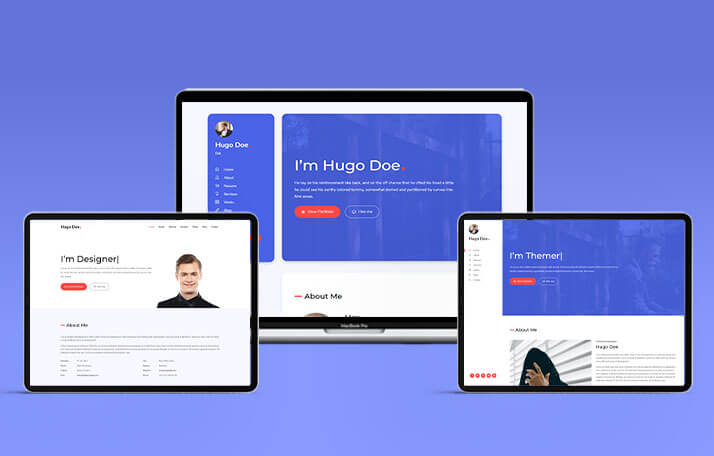
See every module before you buy
Each screenshot opens the full Hugo – Bootstrap 5 CV & Portfolio Landing Page Template live preview, where you can browse the live preview and documentation.
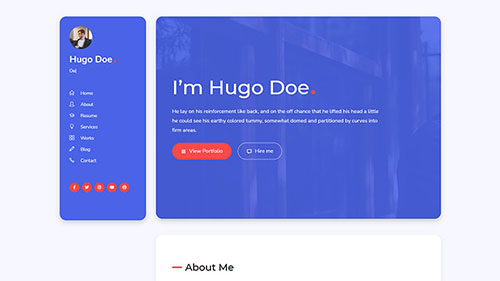
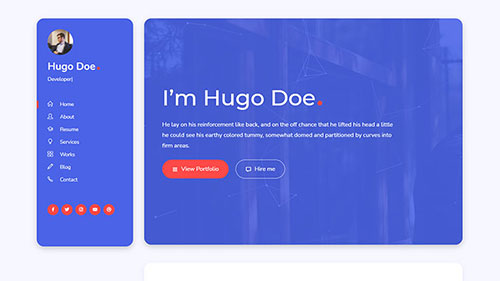
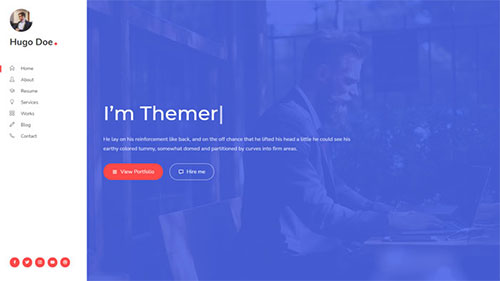


Overview
About Hugo
Building a strong online presence has become a requirement for modern professionals. Whether you're a designer showcasing creative work, a developer presenting case studies, or a freelancer building credibility with clients, your portfolio site influences perception, trust, and opportunity long before a conversation ever starts. Hugo was created for this exact purpose — to make personal branding websites simple, impressive, and accessible, built using Bootstrap 5.3, HTML5, SCSS, and jQuery.
Hugo is a collection of portfolio landing pages designed for professionals who want to present their work, skills, resume, and achievements with clarity and style. It emphasizes visual hierarchy and storytelling, allowing users to communicate not only what they do, but who they are and why they're valuable — a distinction that matters enormously in competitive creative and technical fields where dozens of similarly-skilled candidates are all competing for the same attention.
Unlike generic website templates that try to serve too many categories at once, Hugo focuses specifically on personal and creative portfolio presentation. This makes it ideal for professionals in creative and technical industries who need a platform to present projects, testimonials, work history, skills, and contact information without the overhead of a full CMS or complex framework standing between them and a finished site.
Why a Personal Portfolio Website Still Matters
It's tempting to assume a LinkedIn profile and a resume PDF cover the same ground a portfolio website does, but they don't. LinkedIn is a shared, generic format that every candidate uses in roughly the same way, which means it does little to differentiate one professional from another. A personal portfolio site, by contrast, is entirely under the owner's control — the design, the structure, the way work gets presented all become part of the message itself, especially for designers and developers where the site's own execution quietly demonstrates the exact skill being claimed in the copy.
There's also a permanence advantage worth considering. Social platforms change their algorithms, redesign their profile layouts, and occasionally shut down entirely, taking a carefully built presence with them. A personal portfolio site under a professional's own domain doesn't carry that same platform risk — it stays exactly as designed for as long as its owner wants it to, independent of whatever changes a third-party platform decides to make to its own product.
Hugo aligns with real-world needs across this spectrum: showcasing portfolio projects with images, tags, and descriptions; presenting skills, tools, and capabilities visually; and dedicating space to personal branding in a way that feels intentional rather than an afterthought bolted onto a generic resume template. The template supports a variety of professional paths — designers, developers, photographers, consultants, students, and freelancers — each of whom needs slightly different emphasis but benefits from the same underlying quality of execution.
Features of Hugo Portfolio Landing Page Templates
Built with Bootstrap 5.3
Hugo comes with responsive grids, utility classes, and mobile-first design, supporting clean, modern portfolio layouts that hold up across every device a visitor might use to view them.
Clean, Modern & Minimal UI
The templates feature polished typography, generous whitespace, and clear visual hierarchy, letting the actual work take center stage rather than competing with decorative visual noise.
Multiple Portfolio and Resume Layouts
Hugo offers 6+ layout variations spanning visual portfolio grids, resume-first profiles, agency-style showcases, freelancer pages, and one-page personal branding styles, giving real flexibility in how a professional's story gets told.
9+ Pages Included
Beyond the core homepage layouts, Hugo includes supportive pages that round out a complete personal site — blog listings, blog details, and contact pages — without requiring a separate content platform.
Responsive & Mobile-Ready
All templates are fully responsive, automatically adapting to desktops, tablets, and mobile devices, since a portfolio reviewed on a recruiter's phone during a commute needs to look just as polished as it does on a desktop monitor.
Semantic HTML & SEO-Friendly Structure
Hugo templates feature semantic HTML, optimized headings, and fast-loading pages, which helps a personal portfolio actually get found in search results when someone looks up a professional's name.
Portfolio Showcase Components
Project galleries with hover effects and filtering options let visitors browse a body of work the way they'd browse a curated gallery, rather than scrolling through an undifferentiated list.
Resume & Experience Sections
Structured work timelines and career details are supported directly, giving professionals a way to present their experience with the same visual polish as their creative work.
Testimonials & Social Proof
Client feedback and social proof sections build credibility for freelancers and consultants, using carousel and review layouts that integrate cleanly with the rest of the design.
Downloadable Resume/CV and Contact Form
Offer a downloadable resume alongside a working contact form, giving visitors two clear paths forward — reviewing detailed credentials or reaching out directly — without hunting for either.
Easy SCSS Customization
Change colors, spacing, and typography easily using Hugo's structured SCSS variables, keeping the codebase clean and maintainable even as a portfolio evolves over time.
Who Should Use Hugo
Hugo suits designers — UI/UX, graphic, web, and product specialists — who want their portfolio to demonstrate design sensibility directly through its own execution. A designer's portfolio is arguably the single most scrutinized artifact in their entire job search or client pitch process, since prospective employers and clients are implicitly judging design taste through the site itself, independent of whatever the portfolio's copy claims. Hugo's clean, considered base design gives designers a strong starting point that already reflects well on their sensibility before a single project image gets uploaded.
Developers, whether frontend, backend, full-stack, or app-focused, can use Hugo to present case studies and technical work with the same clarity a well-organized codebase would demonstrate. For developers specifically, the portfolio site itself often becomes an implicit technical demonstration — a recruiter or hiring manager browsing a candidate's personal site is quietly evaluating code quality, performance, and attention to detail alongside the actual project descriptions, which makes Hugo's clean, semantic, well-structured foundation more than a cosmetic choice.
Photographers and videographers benefit from the visual-first layout options, using Hugo's gallery and sorting features to present a body of work the way a curated exhibition would, rather than as an undifferentiated scroll of images. Consultants, coaches, and other service professionals can use Hugo's testimonial and resume sections to build the kind of credibility that drives new client inquiries, since prospective clients in service-based fields often rely heavily on social proof before committing to an initial conversation.
Students and job seekers preparing for a competitive market get real value from Hugo's polished, professional presentation, since a well-built portfolio can meaningfully differentiate an early-career candidate from others submitting a nearly identical resume built from the same templates every other applicant is using. In fields where the volume of applicants for any given opening is high, a genuinely distinctive, well-executed personal site is one of the few levers a candidate has full control over. And freelancers across creative and technical fields benefit from having one coherent site that combines portfolio, resume, and contact functionality, rather than juggling separate tools — a portfolio platform, a resume builder, a separate contact page — for each piece of their professional presence.
Building a Portfolio That Actually Gets Results
A portfolio site only creates value if people actually find it and act on what they see, which is where Hugo's structural choices matter beyond pure aesthetics. The semantic HTML and SEO-friendly markup mean a professional's own site has a genuine chance of ranking when someone searches their name — increasingly common during hiring and client vetting processes — rather than being buried beneath social profiles and directory listings the professional doesn't control. The included blog pages give an option to demonstrate ongoing expertise through writing, which search engines and human visitors alike tend to reward over a static, unchanging portfolio that never gets updated after initial launch.
The combination of a downloadable resume and a working contact form also matters more than it might seem: different visitors are at different stages of evaluating a candidate or freelancer, and giving both a quick way to review credentials and a direct way to reach out means the site serves early-stage browsers and ready-to-hire prospects equally well, rather than optimizing for only one of those audiences at the expense of the other.
It's also worth noting how much easier a well-structured portfolio makes the ongoing maintenance of a professional's own narrative. Careers evolve — new skills get added, older projects age out of relevance, and the overall positioning a professional wants to convey shifts over time. Because Hugo's sections are built as distinct, editable blocks rather than a single monolithic page, updating the portfolio to reflect a career's current state is a matter of editing existing content rather than rebuilding the site from scratch every time something meaningful changes.
Conclusion
Hugo combines clean design, flexible layout options, and a fully responsive Bootstrap 5.3 foundation to deliver a polished, customizable solution for professionals who want to present their work online. With multiple layout variations, resume and portfolio sections, SEO-ready code, and mobile-first responsive design, Hugo makes it easy for designers, developers, freelancers, students, and creative professionals to build a site that not only functions well but genuinely impresses visitors from the very first glance.
In a market where nearly every candidate and freelancer has some form of online presence, the quality of that presence increasingly becomes the differentiator rather than its mere existence. Hugo gives professionals a genuine shot at making that presence count — not through gimmicks or trend-chasing design, but through a clean, considered foundation that lets real work and real credentials speak clearly for themselves.
Related templates
The modules, laid out like the product itself
All 11 highlights, grouped the way they appear in Hugo – Bootstrap 5 CV & Portfolio Landing Page Template's own sidebar.
9+ Pages
6+ Layouts
Built on Bootstrap 5.3 and SCSS
Integrated Contact Form with PHP
Completely Responsive Pages
Best Suited for CV/Resume
Easy to Customize Components
Parallax Pages
Showcase Work with Sorting Integrated
W3C Validated Code
Downloadable Resume/CV Support
What buyers are saying
Really nice template. Well written and easy to follow through
Best portfolio template ever.
It's really wonderful. It's exactly what I've been looking for.
Before you get started
Hugo is a fast-loading, fully responsive Bootstrap portfolio template built with Bootstrap 5.3, HTML5, SCSS, and jQuery, ideal for personal portfolio landing pages.
Hugo includes 6+ layout variations spanning visual portfolios, resume-first profiles, agency showcases, freelancer pages, and one-page personal branding styles.
Yes, Hugo supports a downloadable resume/CV option alongside a working contact form.
Yes, Hugo is well suited for freelancers, small businesses, and creative professionals looking to showcase work and attract clients.
Hugo follows SEO best practices with W3C-validated code, semantic HTML structure, and optimized meta tags to help portfolios rank higher in search results.
Yes, every layout is fully responsive and tested across desktops, tablets, and mobile devices.
Change log
- Bug fixing
- Package updation
- Minor ui fixes
- Updated to 5.3.5
- Bug Fixing
- Updated to 5.3
Related templates

PORTO – Multipurpose Bootstrap 5 Website Template
PORTO is a multipurpose Bootstrap 5, SCSS, and jQuery website template featuring 15+ homepages and app landing pages, built for SaaS, startups, portfolios, and digital agencies worldwide.

ORYO – Angular Templates for SaaS, Agencies & Startups
ORYO is a modern Angular 20 template collection built with TypeScript and SCSS, offering responsive landing pages and portfolio layouts for startups, SaaS teams, agencies, and freelancers.

Creative – Bootstrap Agency Landing Page Template
Creative is a modern, multipurpose Bootstrap website template with 14+ homepages, built with SCSS and jQuery for digital agencies, marketing studios, and creative service businesses.
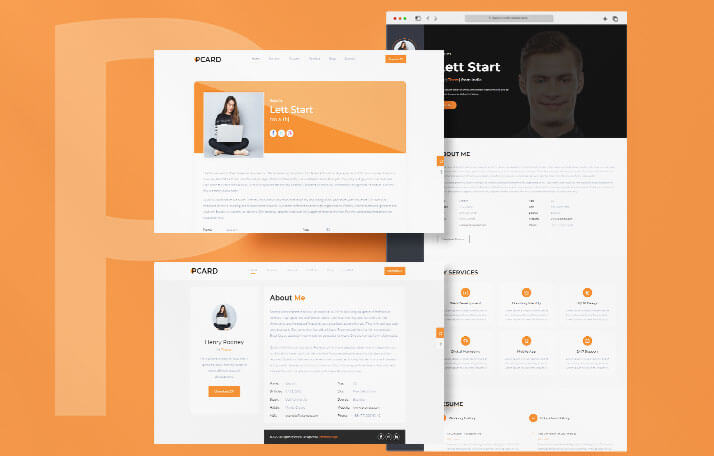
ProCode – Bootstrap Portfolio, CV & Resume Template
ProCode is a Bootstrap 5.3 portfolio and resume website template with TypeScript and jQuery variants, built for developers, freelancers, and professionals creating an online resume.
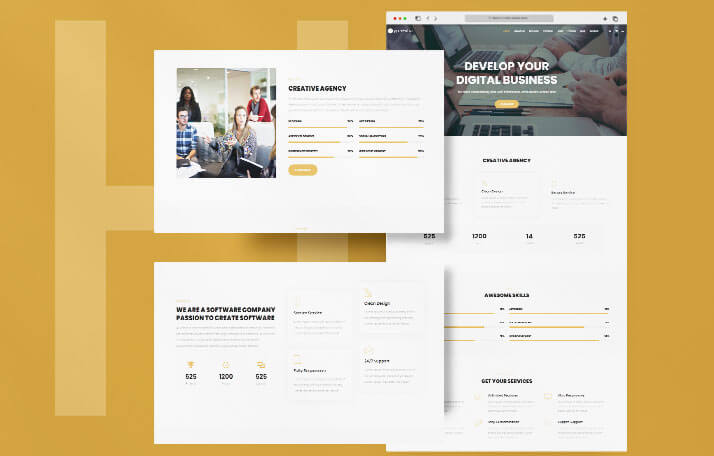
HyperExtra – Bootstrap 5.3 Agency Portfolio Template
HyperExtra is a Bootstrap 5.3 portfolio template with SCSS and jQuery, built for digital agencies, creative studios, startups, and freelancers who need a minimalist, one-page showcase site.

BOB – Bootstrap Resume & Portfolio Website Template
BOB is a creative Bootstrap portfolio and resume website template, built with SCSS and jQuery, and perfect for online resumes, simple portfolios, CV websites, and personal branding pages.
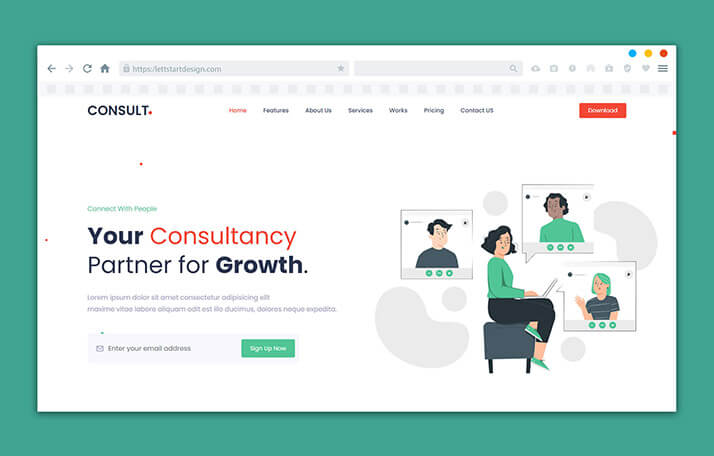
Consult – React Next.js Consultancy & Agency Landing Page
Consult is a creative and responsive Next.js website template built for agency landing pages, consultancy websites, IT services, consulting firms, and minimalist single-page sites.

Rekto – React Next.js Digital Agency Landing Page
Rekto is a modern, creative, and clean React Next.js landing page template built for digital agencies, consultancies, IT services, and focused single-page consulting websites today.
Use code FIRST30 at checkout — valid across every Bootstrap, Angular, and React
template.